
Kamal Covert '26
BA English Honors
Minor in Writing and Rhetoric
Summa Cum Laude
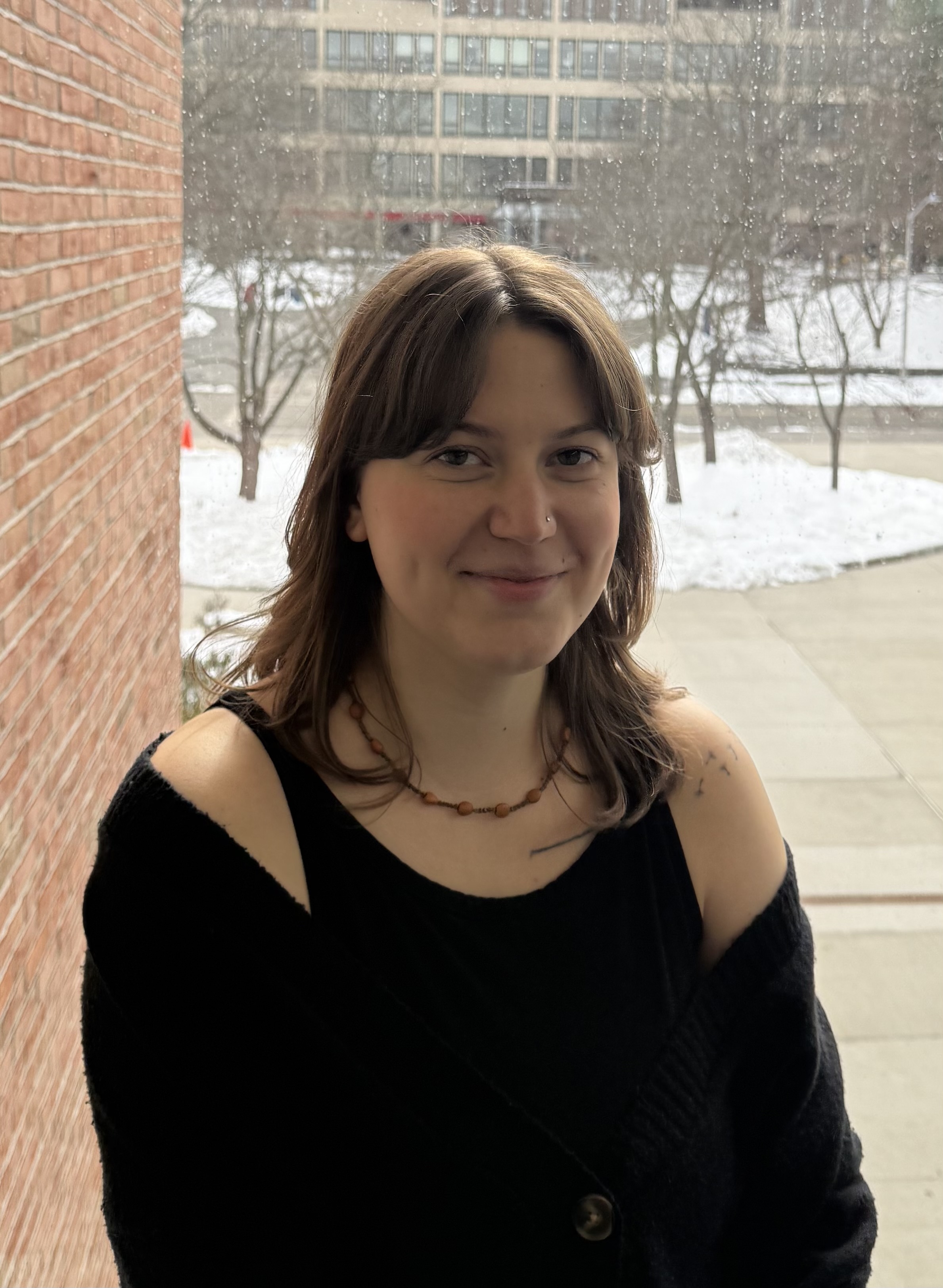
On Stony Brook:
I first heard about Stony Brook University while in high school. At the time, it was not a school I had considered because I never thought I would get in, I actually did not think I would go to college. My academic journey really started a year after high school graduation when I began taking part-time classes at Suffolk County Community College. After I earned my Associate of Arts degree in English, I wanted to continue my education. Despite doing below average academically in secondary school, I excelled at SCCC, and when I transferred to Stony Brook, I really began to find my academic and personal footing.
I chose Stony Brook for a combination of reasons. It was close to home so I could
commute, and it was always something I thought I could never do. Having the opportunity
to attend was a dream come true. I really enjoyed the idea of smaller classes within
the Department of English, and the potential opportunity to join the English Honors
program, which I was later accepted into.
On her major:
My desire to be an English major really stemmed from my passion to learn more about the world around me. Before I decided on English, I changed my major four times. I was interested in so many disciplines and fields that I could not decide. I simply wanted to learn as much as I could. I decided on English when I realized that it is a true interdisciplinary field, and the intersection of media, culture, literature and advocacy spoke to me. Once I declared my major in English, I felt a sense of community right away. My minor in Writing and Rhetoric stems from my desire to learn more about writing as a form of cultural exchange, and how to be the most effective communicator I could be.
Favorite class:
One of my favorite classes was EGL 492 with Dr. Benedict Robinson. As a requirement for the English Honors program, this course's topic was rooted in the theory of fictionality. This was a course that I originally struggled with. I was new to studying any theory in depth, and I found myself working harder than in any other course I had ever taken. In the end, I learned so much and I was so proud of the work I produced in the class.
Interests and accomplishments:
My work sits at the intersection of environmentalism and narrative ethics, driven by the belief that storytelling is a vital form of agency. I am often fascinated by how our entanglement with the natural world shapes our ethical understandings.This is a pursuit that led to my English Honors thesis on ethical responsibility to our environment in Kazuo Ishiguro’s Klara and the Sun. As a writing tutor at the Writing Center, I am also interested in and dedicated to helping others find their own voices and be able to share it with others in the most effective way possible.
I am a recipient of two URECA awards, URECA Summer and URECA REACT, for my oral history and archival research on ecological trauma, and for my work on my Honors thesis. I am also a recipient of the Provost’s Award for Academic Excellence. In March 2025, I gave a virtual presentation of autoethnographic research on systemic educational inequities at the United Nations Commission on the Status of Women (UNCSW), under the supervision and guidance of Dr. Neisha Terry Young. This project is rooted in my commitment to social justice, sparked from a personal childhood of educational invisibility to a desire centered on making others seen. Additionally, alongside Dr. Young, I worked as the Lead Public Humanities Intern for the VOICE Research Lab, where my involvement centered on the idea that storytelling is not just a creative act, but a profound form of social agency. In this role, I worked specifically to create platforms where immigrants could reclaim their narratives, transforming them from subjects of academic study into the authors of their own identity stories. This is something that I will bring with me as a future educator.
Plans for post-graduation:
I will be continuing my education here at Stony Brook, pursuing a Master of Arts in Teaching: English within the School of Professional Development. After earning my teaching certification, I hope to teach high school English in New York.
Advice for future Seawolves:
My advice is to embrace a non-linear path. For a long time, I felt behind because I didn't fit the traditional mold of a "perfect student," but those gaps in my education actually became my greatest strengths. Don't be afraid to lean into the subjects that make you feel seen, even if they aren't the ones that come easiest to you. Seek out mentors who listen as much as they teach. The faculty at Stony Brook are incredible resources who can help you turn your personal curiosities into professional research. Most importantly, remember that your unique perspective is an asset, not a hurdle.
Favorite SBU memory:
My favorite memories at SBU are most certainly of the friends I made and the connections I built. Specifically at the Writing Center, where I have met my best friends and have received endless support and companionship.
Parting thoughts:
I would like to take this opportunity to thank the many faculty and staff that have contributed to making my time at SBU the best it could be. Of course, Dr. Neisha Terry Young for her mentorship and belief in me. To Margaret Hanley and Alyssa Bergman for their support and dedication to the Department of English. To Dr. Benedict Robinson and Dr. Heidi Hutner for teaching me how to find joy in researching theory. To Dr. Justin Johnston and Dr. Andrew Flescher for their support and guidance on my thesis, Klara and the Sun: Symbolic Webs and the Ethics of Coexistentialism. And lastly, to Dr. Jennifer Albanese and Dr. Sara Santos of the Writing Center who fundamentally changed my life when they hired me as a writing tutor.
I would like to take this opportunity to thank the many faculty and staff that have contributed to making my time at SBU the best it could be. Of course, Dr. Neisha Terry Young for her mentorship and belief in me. To Margaret Hanley and Alyssa Bergman for their support and dedication to the Department of English. To Dr. Benedict Robinson and Dr. Heidi Hutner for teaching me how to find joy in researching theory. To Dr. Justin Johnston and Dr. Andrew Flescher for their support and guidance on my thesis, Klara and the Sun: Symbolic Webs and the Ethics of Coexistentialism. And lastly, to Dr. Jennifer Albanese and Dr. Sara Santos of the Writing Center who fundamentally changed my life when they hired me as a writing tutor.